
The Bricks market is currently experiencing moderate growth due to the increased demand for sustainable and energy-efficient building materials. The fluctuation in raw material prices coupled with strict environmental regulations is posing challenges to the growth of the Bricks market. Moreover, the availability of alternative building materials like wood and metal is also a challenge for the market. Beyond their structural utility, bricks also contribute to aesthetic appeal, with different colors, textures, and finishes available.
Antique specialists and dealers offer unique bric-a-brac pieces such as rare first editions of books, vintage maps, typewriters, vintage cameras, and mid-century furniture. Anything that you end up with will definitely be a unique and delightful addition to your home and make for particularly special gifts. The market is full of hidden gems and is a haven for collectors or any history buffs on the hunt for something special, and even has a hidden café inside.
Bricks Market Companies
Moreover, supportive government initiatives, coupled with a rising population, contribute to sustained growth. The construction boom in countries such as China and India further solidifies Asia-Pacific as a key market for bricks, with the potential for continued expansion in the future. The market is highly competitive, driven by a combination of established players, regional manufacturers, and innovative startups. The focus on sustainability and eco-friendly construction practices has spurred innovation in the market.
The possibilities for the expansion of the blocks and bricks business have also been boosted by India’s increasing population, increased per capita income, enhanced economic growth, industrialisation, and quickening urbanisation. Clay bricks, a fundamental category in the bricks market, are crafted from natural clay, typically through the firing process. These bricks are renowned for their durability, thermal insulation properties, and traditional aesthetic appeal, making them a staple in construction. Manufacturers are exploring energy-efficient kiln technologies and incorporating recycled content, aligning with the industry’s green initiatives. The global brick market will further evolve as construction technologies and sustainable building practices are invented. Increasing sensitivity towards the environment is going to stay in the trend and hence spur innovation within brick manufacturing processes in order to trim carbon footprint and improve energy efficiency.
Who Are The Prominent Players Operating In The Bricks Market?
Bricks add charm and a sense of uniqueness to commercial buildings as they do not dent and rot, which enhances their adoption in the construction of commercial buildings. The growing call for in the residential and infrastructure sectors is a key driving force of increase within the concrete block and brick market. In residential production, the surge is fueled by way of urbanization and the need for less costly housing, especially in emerging economies like India and China. Government projects assisting housing infrastructure and growing consumer desire for single-own family houses in addition propel this demand.
This shift is anchored in industrial-waste utilization, enabling plants to cut firing temperatures by 20% and align with circular-economy mandates. The brick market size for fly-ash variants is forecast to expand faster than any other type, helped by public procurement criteria that reward recycled content. Calcium-silicate units attract architects pursuing thermal-mass advantages in Europe’s cool climates, while concrete blocks that skip kiln firing appeal where electricity is available and fuel security is uncertain. Rapid migration back to major Asian cities is refilling pipelines for mid-rise housing projects, sustaining steady brick market demand.
Breaking Down The Brick Market: LEGO Parts Vs LEGO Sets Vs LEGO Minifigures – What Do The People Want?
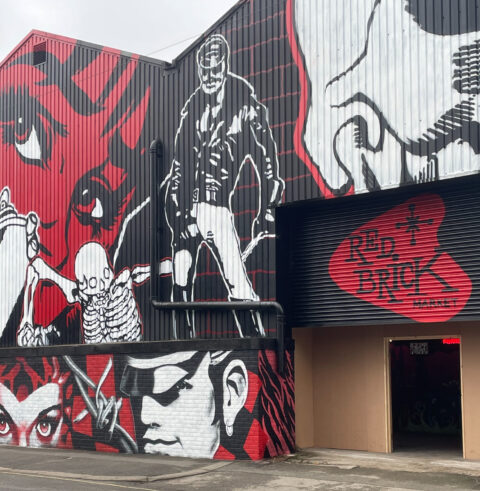
For all your accessory needs there’s Selected Steeze offering hand-picked vintage pieces and On The Sunshine selling snazzy handmade jewellery. Red Brick Market acts as a department store alternative retail site where stallholders needn’t have to be present at their stall. With a central payment desk and staff employed by Red Brick Market on the floor, stallholders are able to come and go as they please and shoppers just pay on their way out whether they are there or not.
In the infrastructure sector, huge-scale initiatives such as airports, roads, and public utilities are riding the want for durable and price-powerful building materials. The increase in infrastructure is particularly strong in growing areas, in which urbanization necessitates new construction and preservation tasks. This fashion is anticipated to keep, supported by means of authority’s guidelines and investments geared toward modernizing and increasing urban infrastructure. According to the application, the residential building segment held a 32% revenue share in 2024. The residential building segment in the bricks market refers to the use of bricks in the construction of houses and residential complexes. A notable trend in this segment is the growing preference for bricks in sustainable and energy-efficient housing projects.
Please Fill Out The Form Below For A Free PDF Report Sample & Online Dashboard Trial
From time immemorial, the bricks having strength, flexibility, availability and cost advantages have remained the most popular construction materials available in the market inspite of the availability of superior construction materials these days. South America’s brick market pivots on warehouse and logistics developments catalyzed by e-commerce. Brazil accelerates industrial parks along new highways, increasing demand for large-format blocks that reduce lay-rate time. Middle East and Africa, although smaller today, hold the loftiest upside as 70% of buildings required by 2040 are yet to be built. Kenya, Nigeria and Egypt roll out public-private partnerships to deliver affordable homes, embedding brick procurement targets into tender documents to stimulate domestic manufacturing. Europe’s 90% emissions-cut target for 2040 is reshaping the brick market, accelerating the adoption of fly-ash and calcium-silicate bricks with smaller carbon footprints.
- Based on application, the market is segmented into residential building, commercial building, infrastructure, path, parterre, and landscaping.
- This product has stayed on top in the market due to its strengths and high thermal properties, hence it’s suitable for residential and commercial building purposes.
- In an era where construction trends are shifting towards green building practices and cutting-edge design aesthetics, the lack of innovation in the bricks market poses a challenge.
- Clay bricks dominated the brick market with 65% of revenue in 2024, yet fly-ash bricks record a 3.22% CAGR through 2030, widening their presence in regions tightening carbon rules.
Bricks Market Size & Trends
The Brick Market was the last of his confirmed works, and is shows the influence that English architecture had on his designs. The building’s design was based on the Old Somerset House in London, with Harrison copying elements such as the arcade on the lower floor, the pilasters on the upper floors, and even the alternating arched and triangular window pediments. Also, bricks are preferred because they are solid, tough and durable to serve their users for several years without needing replacement. They are suitable for relocation in harshest of weathers including during fires, and tend to provide good insulation. Such features contribute to the desirability of bricks for construction in areas that are more likely to experience natural disasters or climatic variations, factor that enhances market for the product.
Foldable Inflatable Boats Market Size, Share And Forecast 2034
The remainder of the brick economy is driven by demand for used sets, individual LEGO bricks and pieces, and minifigures. Once a former service yard and now a street food hotspot, this food market is one of Brick Lanes most popular spots. You’ll be spoilt for choice with the food trucks at Ely’s Yard serve up piping hot burgers, chicken wings, burritos, jerk chicken, Argentinian steaks, and much much more. The food market is also home to some public permanent artworks by the likes of Banksy, Shepard Fairey, and Invader Vhils, and also hosts a variety of activities and themed events such as London’s first City Beach and brand pop-ups. The market is open seven days a week from 11am to 11pm so you can always count on Ely’s Yard for some good grub if you’re in the area.
By Type, Clay Segment Is Expected To Dominate The Market During The Forecast Period
In effect, these bricks easily become favored in sustainable construction methods, hence serving to achieve the global goal of low ecological footprint. Other brick innovations include interlocking designs for more rapid assembly and lighter types for seismic regions attributed to improving overall structural performance. In the dynamic flow of global construction materials, bricks emerge at the core because of their durability, versatility, and sustainability. Bricks form a greatly diversified market globally, with different types meeting special construction needs. Clay bricks, sand lime bricks, fly-ash clay bricks, and many such specialized variants fulfill various conditions of the environment and architectural needs.
The realignment of trade flows is encouraging diversification, with industry players seeking suppliers in tariff-free zones and strengthening partnerships with local raw material providers. These policy shifts are compelling market participants to balance cost control with compliance and supply chain reliability. This brick industry is embedded with all sorts of competitors, continuously showcasing milestones of companies that have other kinds of strengths and bring forth different innovations. From Bigbloc Construction Ltd. in North America to the Brampton Brick in Europe, all these substantial contributors have been major components in the technological advancement and market expansion alike.
- During the preliminary phases of the pandemic, lockdowns, social distancing measures, and delivery chain interruptions led to the suspension or postponement of many construction projects.
- The size is uniform, thus ensuring consistency in building that helps in efficient building practices.
- The absence of innovative approaches in material composition, energy efficiency, and sustainable practices may make bricks less attractive to architects, builders, and developers seeking modern, eco-friendly solutions.
- The rising population, higher per capita income, faster economic growth, industrialization, and rapid urbanisation of India have all contributed to the possibility of the blocks and bricks industry expanding.
- In terms of application, the global market is categorized into residential buildings, commercial buildings, infrastructure, paths, parterre, and landscaping.
- The global brick industry is extremely competitive but innovative, committed to delivering products while being concerned for sustainability in this industry.
The bricks market faces a significant restraint in the form of a lack of innovation in manufacturing techniques and designs. Traditional brick production methods have seen limited advancements, potentially hindering the market’s ability to meet evolving demands in the construction industry. The absence of innovative approaches in material composition, energy efficiency, and sustainable practices may make bricks less attractive to architects, builders, and developers seeking modern, eco-friendly solutions.
In contrast, Western markets face higher fees and stringent environmental guidelines that restrict the usage of conventional concrete blocks and bricks. Consequently, the Asia-Pacific region’s favorable conditions for manufacturing, coupled with its large infrastructure desires, contribute to its dominance within the worldwide concrete block and brick market. This aligns with the increasing focus on eco-friendly building materials and sustainable construction practices, making clay bricks an attractive choice for environmentally conscious projects. The COVID-19 pandemic appreciably impacted the Concrete Block and Brick Market size, causing a temporary decline in call for because of disruptions in creation activities.